Technology
A layered architecture for energy infrastructure.
RAE keeps physical energy systems, connected controls, orchestration, and software insight aligned around one operating model - and one continuous loop of energy and information.

The stack
Four layers, each with a clear job.
From the battery on the wall to the forecast in the cloud, each layer has a defined role and a defined interface to the layers around it.
- RAE Charge
Layer 01 · RAE Charge
Hardware foundation
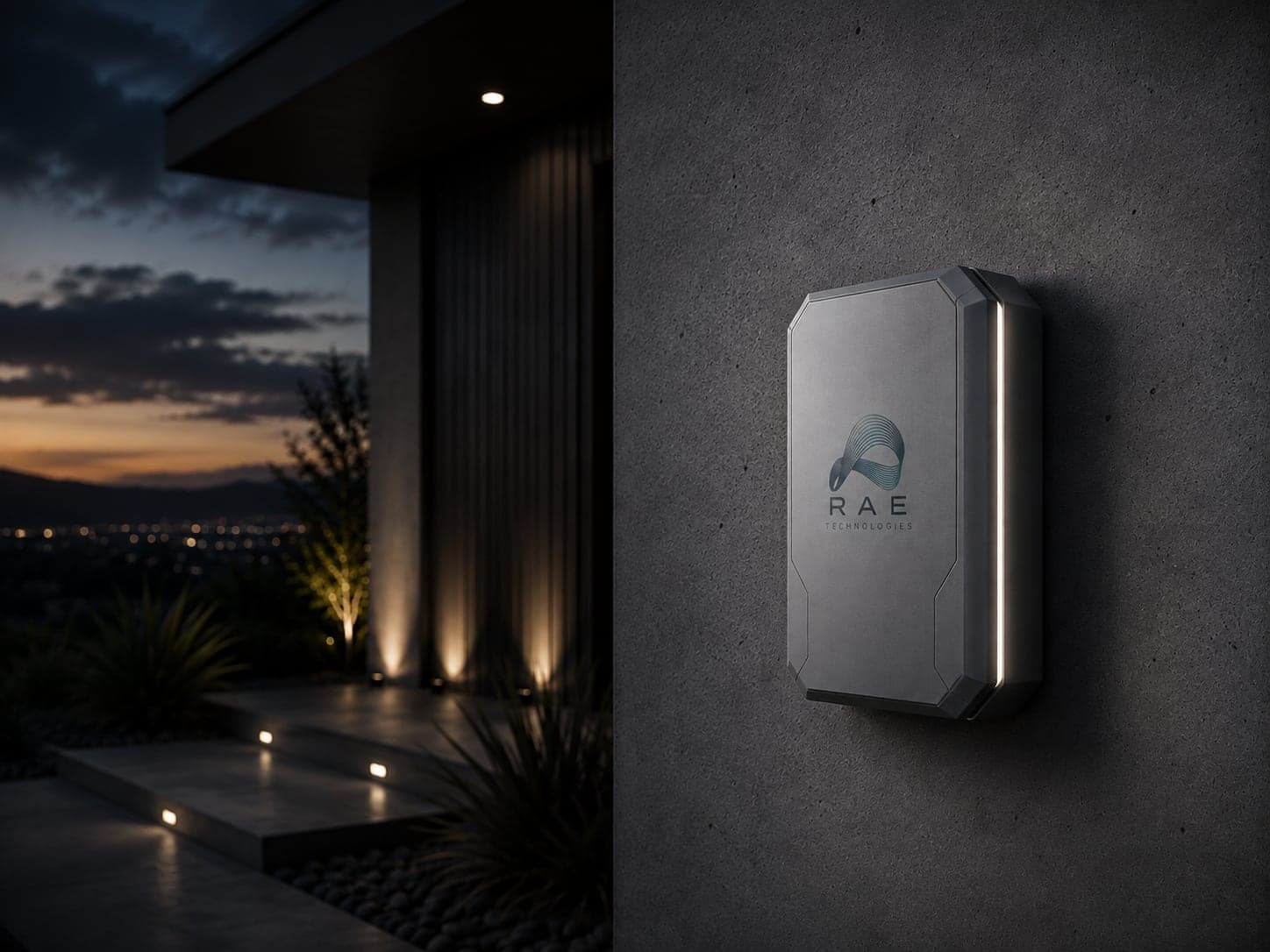
The physical layer: storage infrastructure and field equipment engineered to be connected, observed, and managed for the long term.
- RAE Connect
Layer 02 · RAE Connect
Communication and control
The control layer gives field systems a bridge between hardware behavior and platform-level coordination, with local logic that keeps sites predictable.
- RAE Summit
Layer 03 · RAE Summit
Orchestration
Management software coordinates connected assets, operating modes, and system-level priorities across homes, sites, and programs.
- RAE Clear
Layer 04 · RAE Clear
Software intelligence
Monitoring and analytics make system data visible and prepare the platform for forecasting and decision support.
Operating model
Disciplined infrastructure, connected through software.
The platform is designed around practical system roles instead of isolated products. Storage provides capacity, controls create a communication layer, orchestration coordinates assets, and intelligence turns system behavior into useful visibility.
What the intelligence layer learns is handed back to orchestration, which changes how storage and controls behave. The output of the last step is the input of the first - the loop at the center of RAE’s mark.
The public site describes these capabilities at a product-architecture level. It intentionally avoids private specifications, confidential roadmap details, and unvalidated performance claims.
Engineering principles
How we make decisions.
Safety first, then specifications
Layered electrical protection, thermal management, and a certification path designed in from the start rather than retrofitted.
Serviceable in the field
Telemetry, remote diagnostics, and over-the-air updates reduce truck rolls and keep systems current after commissioning.
Coordinated, not just connected
Operating priorities flow down and observations flow back up, so the platform behaves as one system rather than a set of devices.
Start a conversation
Want to go deeper on the architecture?
We are glad to walk engineering, utility, and partner teams through how the layers fit together.